← Home

ENGINEERING

Selected works in additive manufacturing, fabrication, and robotics.

01 — ROBOTIC CLAY ADDITIVE MANUFACTURING

2021

Consortium for Research and Robotics

with Jonathan A. Scelsa
and Jennifer Birkeland

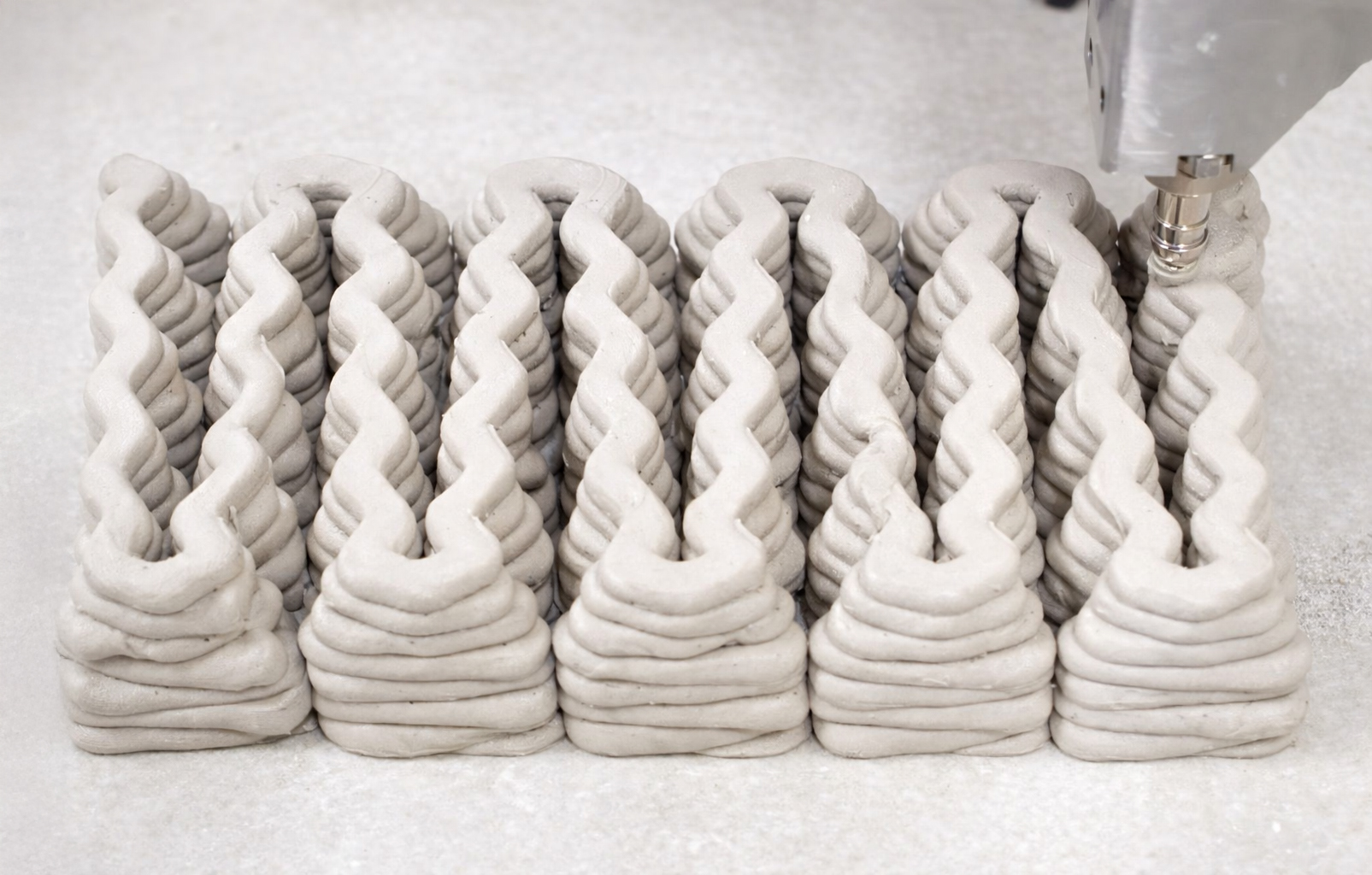
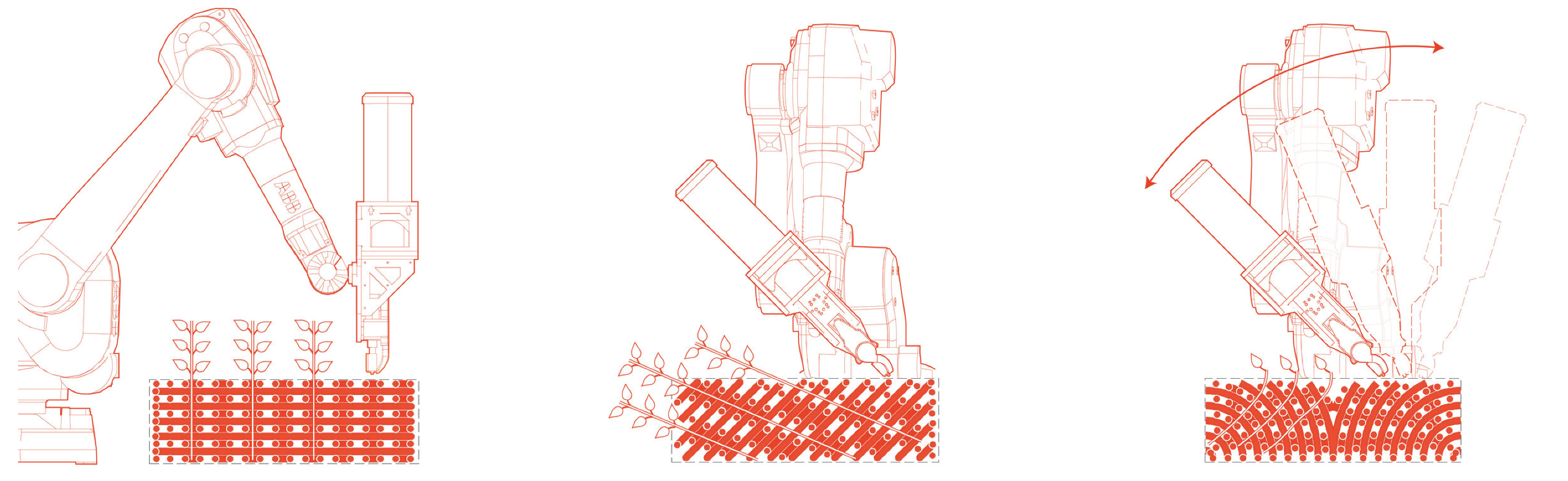
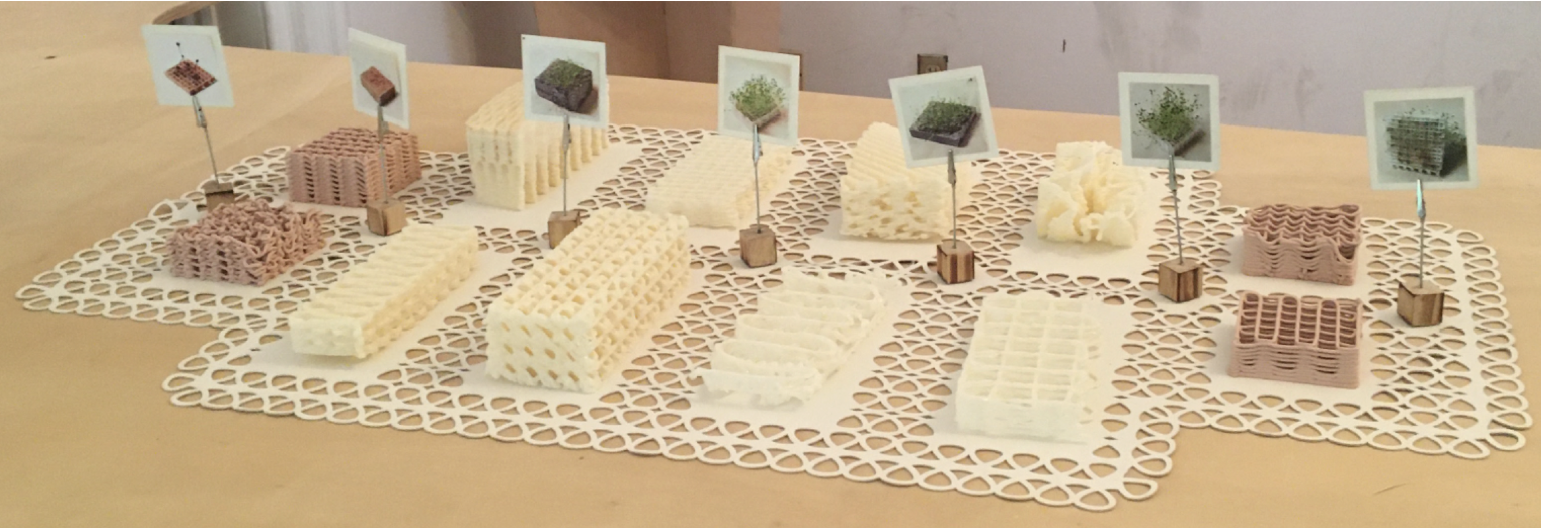
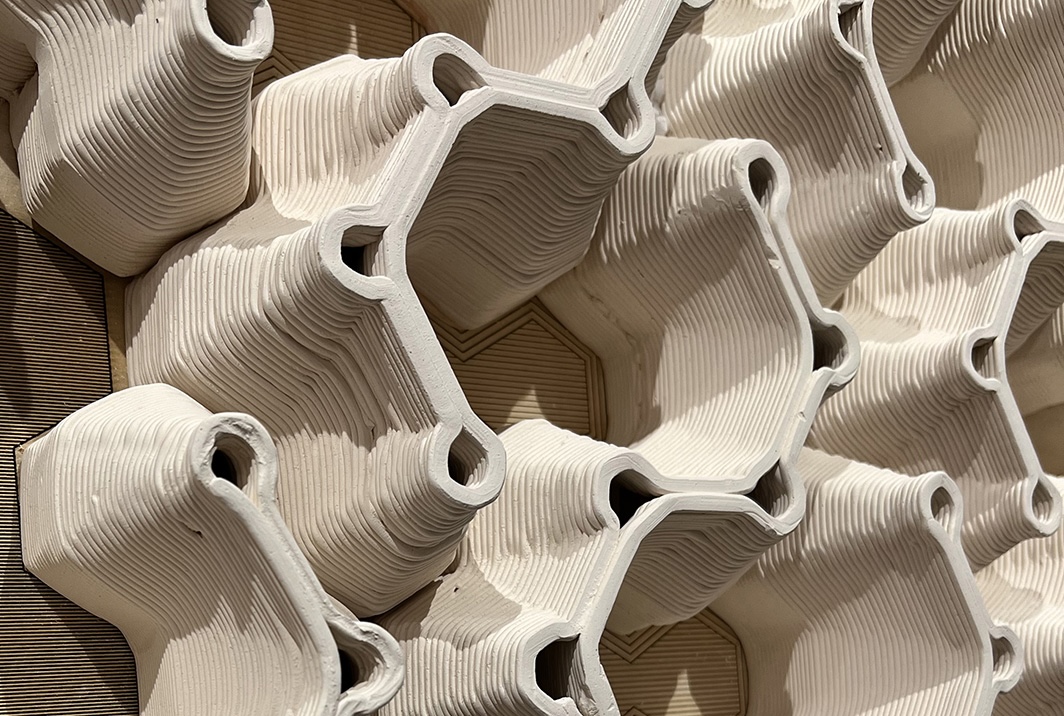
Aeroponic Aggregate is a robotic clay additive manufacturing project exploring the fabrication of custom masonry units through large-scale robotic extrusion. The project focuses on the design and production of 3D-modeled clay bricks fabricated using an ABB robotic arm equipped with a custom extruder.
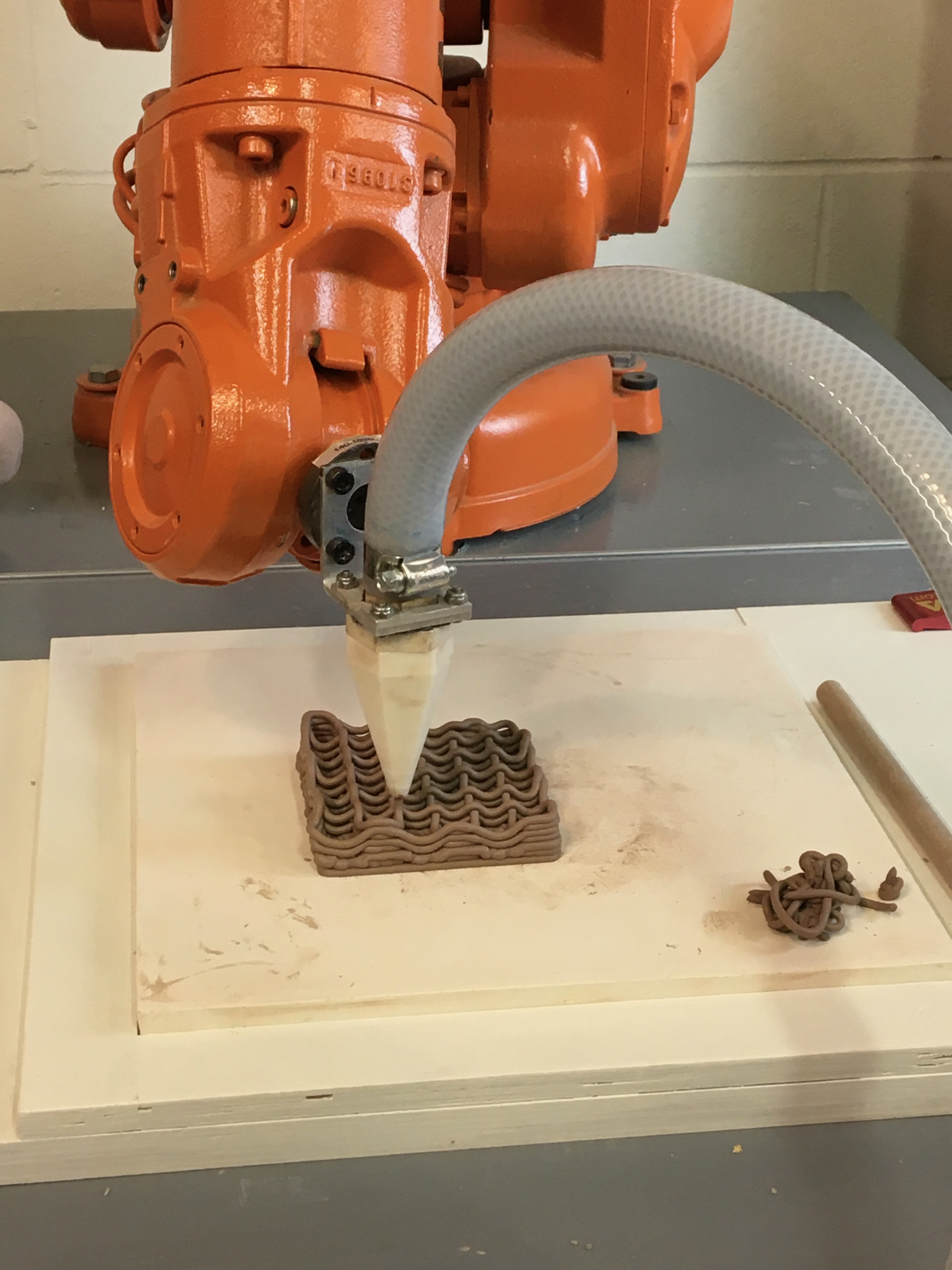
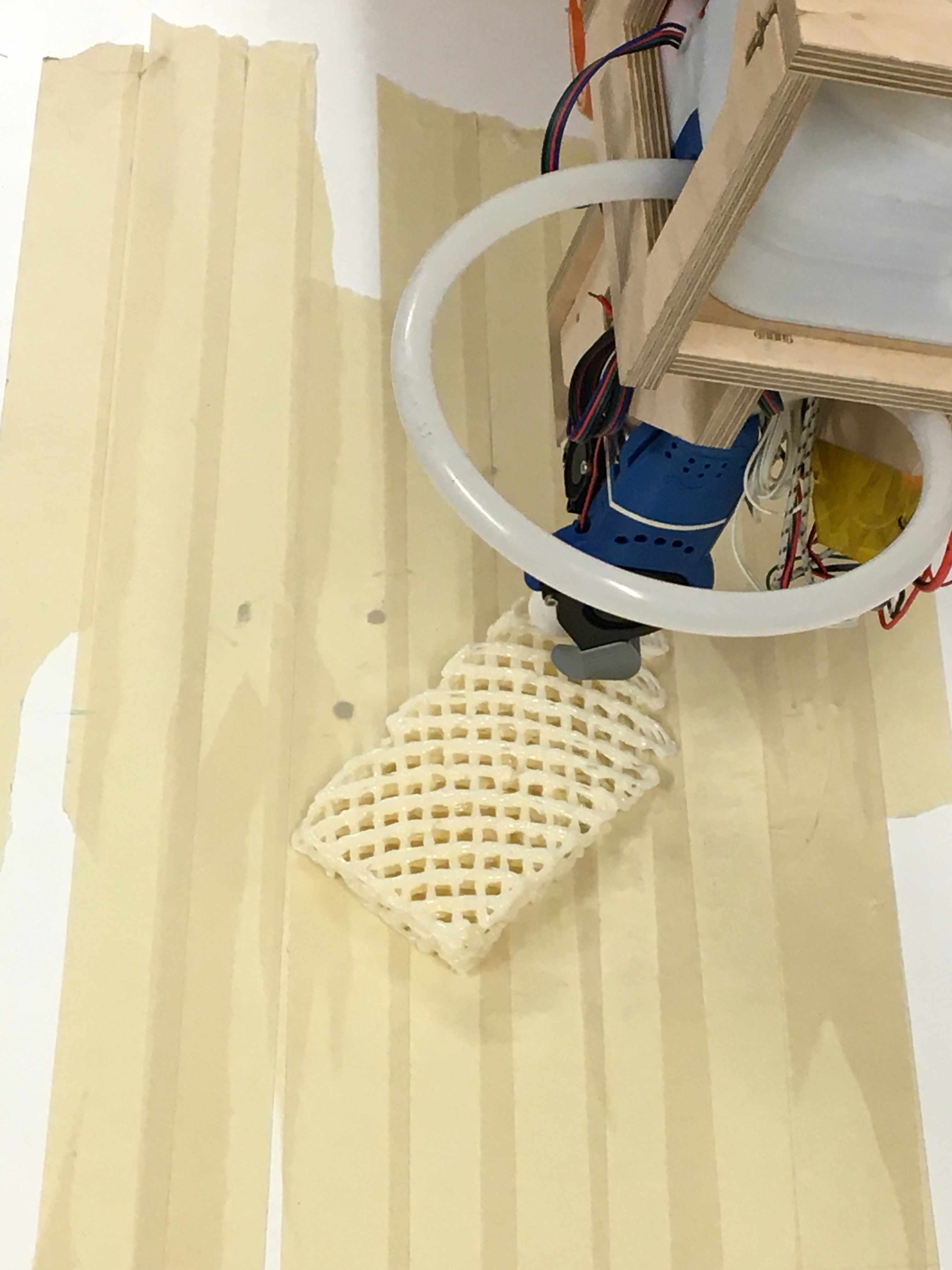
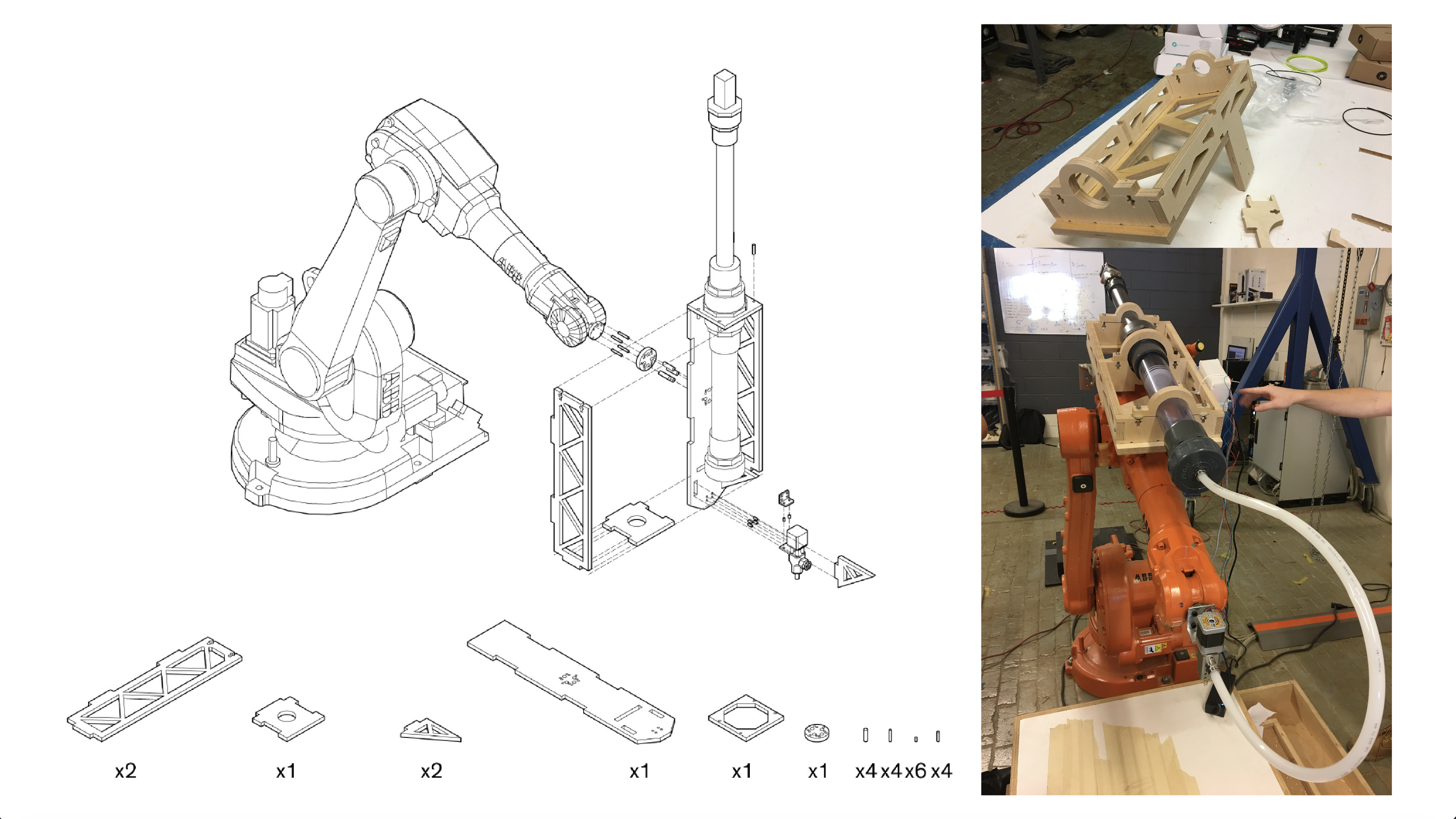
My work centered on robotic operation and scripting to generate extrusion toolpaths directly from digital models, as well as the design and CNC fabrication of a custom shoulder-mounted attachment for the clay extruder. I also developed brick geometries optimized for robotic printing, executed clay printing workflows, and contributed to fabrication drawings and technical illustrations documenting the process.


Robotic clay extrusion Clay extrusion detail


Clay brick fabrication

Custom extruder attachment

Extruder design

Fabrication process

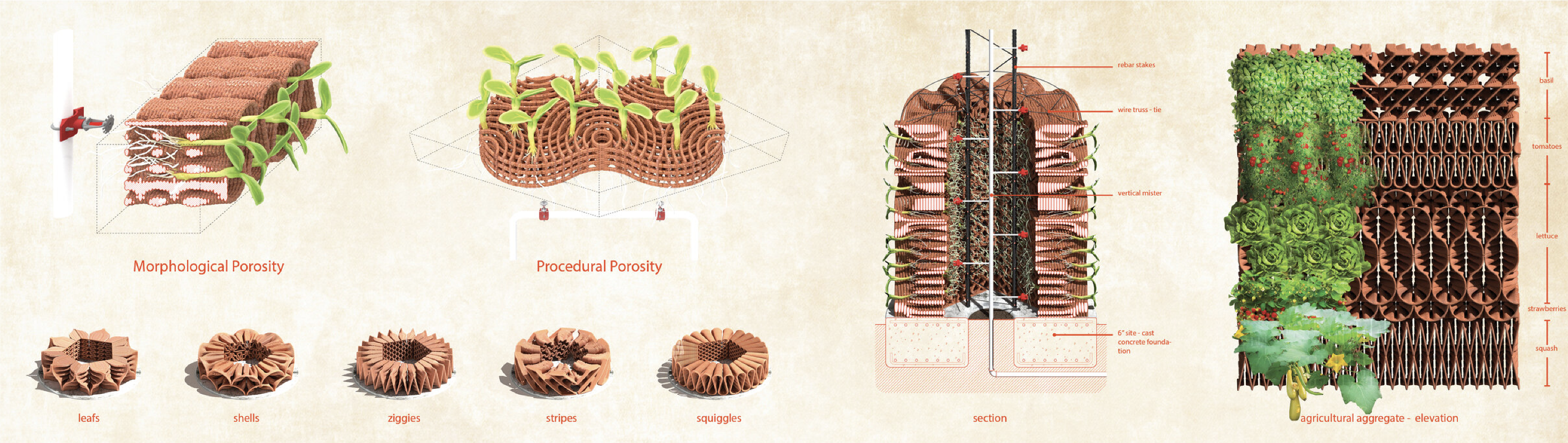
Brick geometry design

Fabrication drawings

Technical illustrations

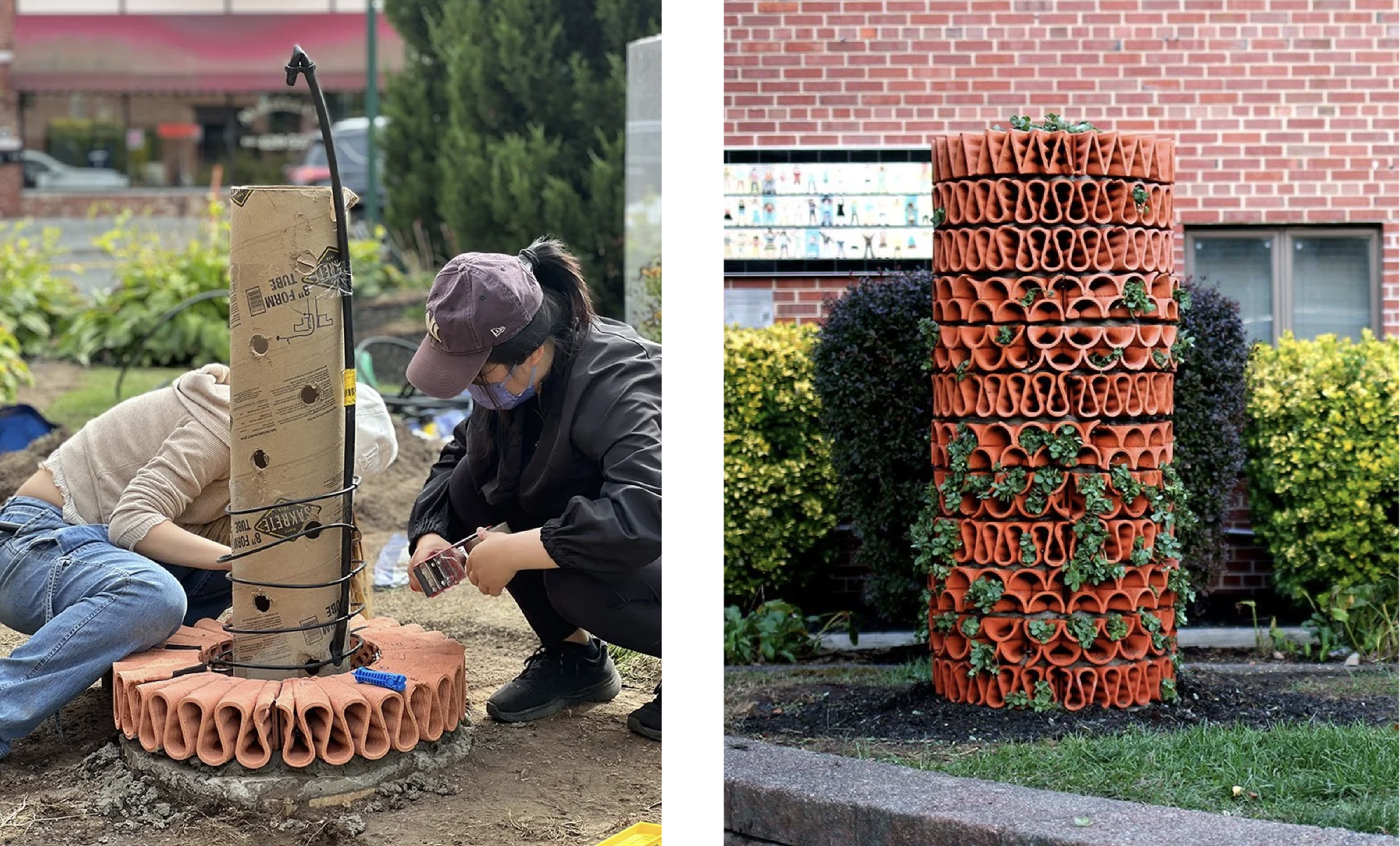
Final result

02 — BIOROBOTICS RESEARCH

2025–Present

Harvard Biorobotics Lab

with Rob Howe
and Cathy Cheng

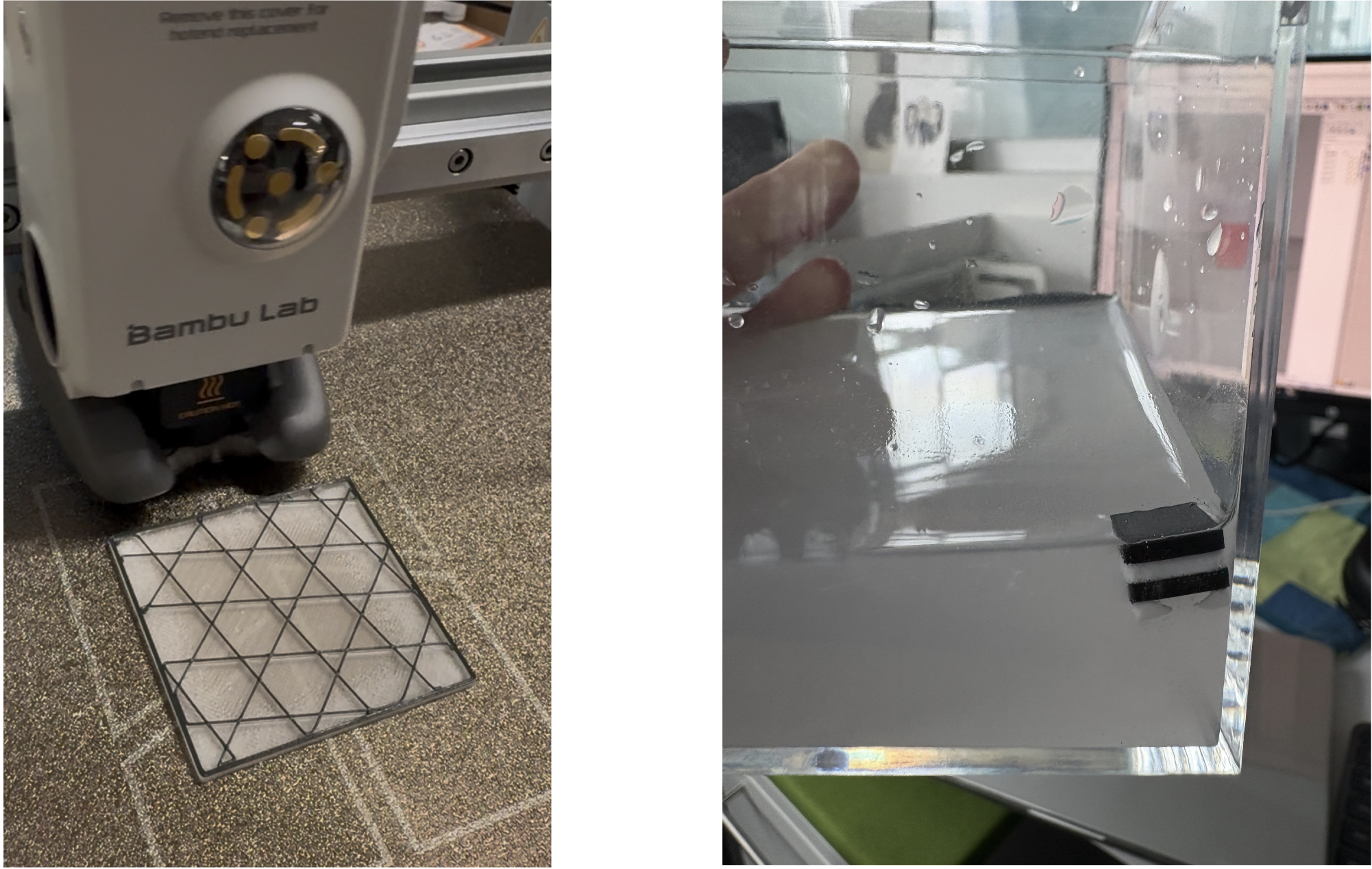
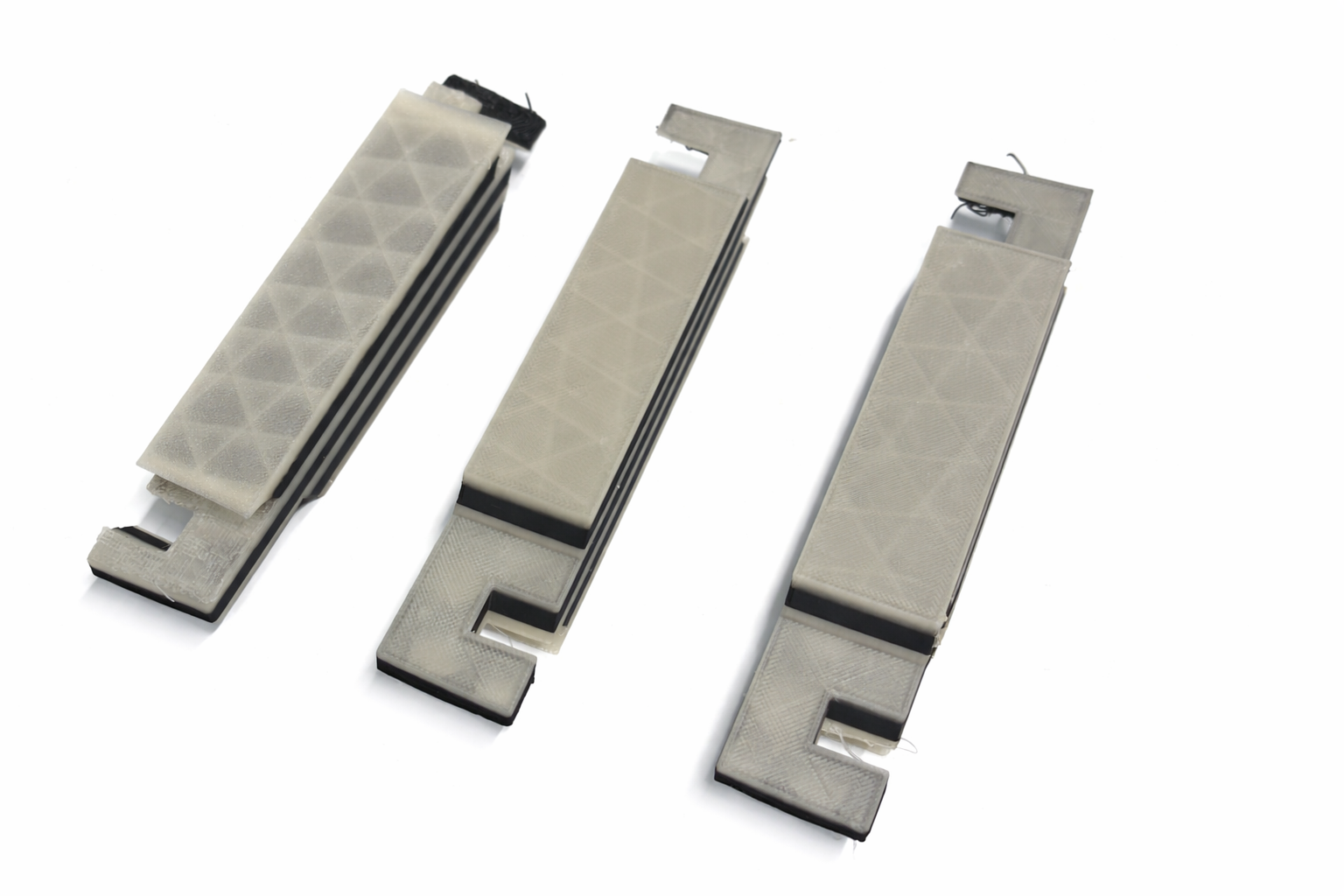
Multi-material additive manufacturing research focused on biodegradable and water-dissolvable soft robotic systems. Investigates material interfaces, print strategies, and controlled structural dissolution.
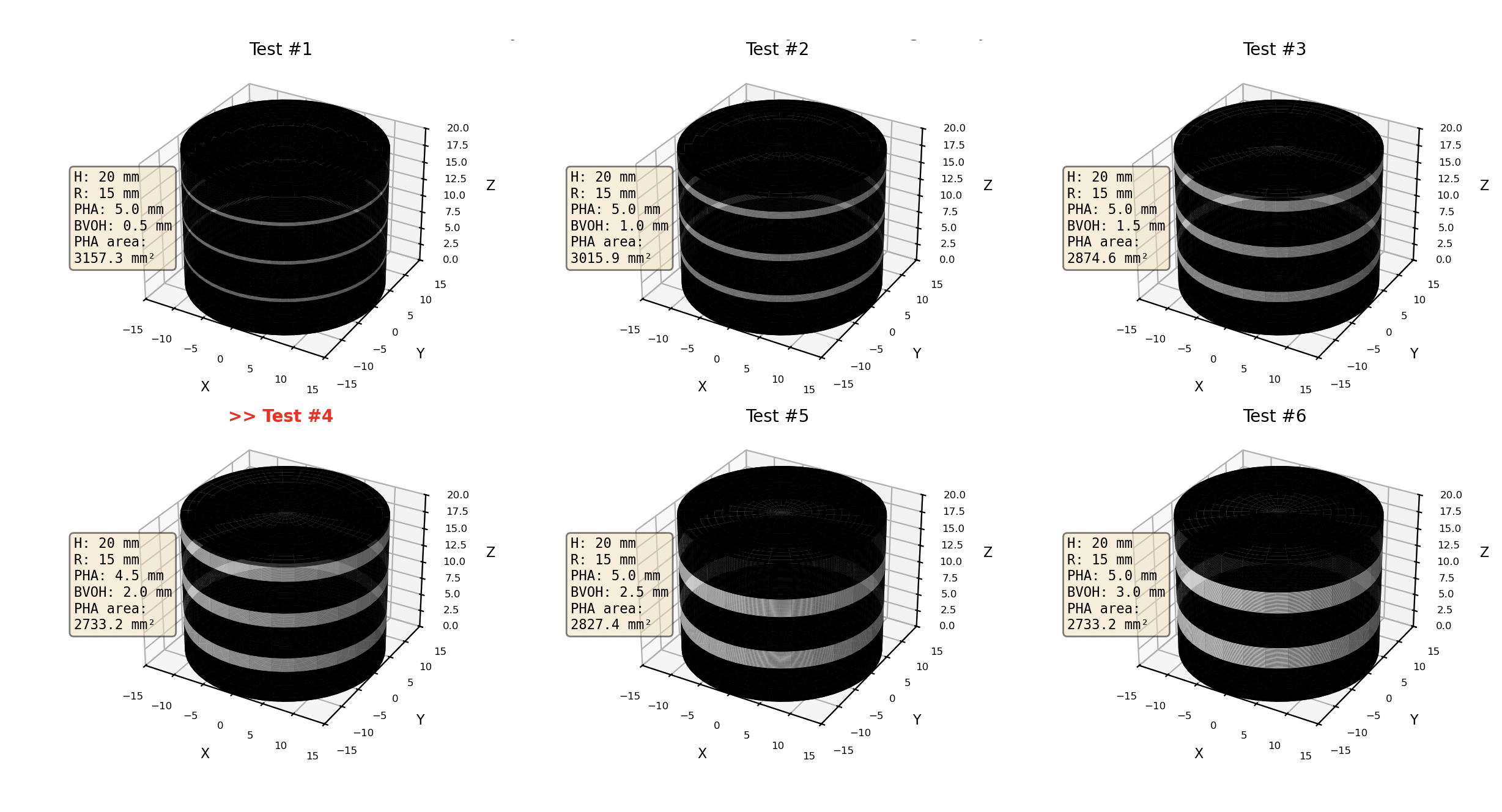


Biorobotics research

Soft robotic systems

Material interfaces

03 — TRACE — VISION-BASED OBJECT LOCALIZATION FOR MEMORY SUPPORT

2025

with Izzie Mack
and Yanning Hou

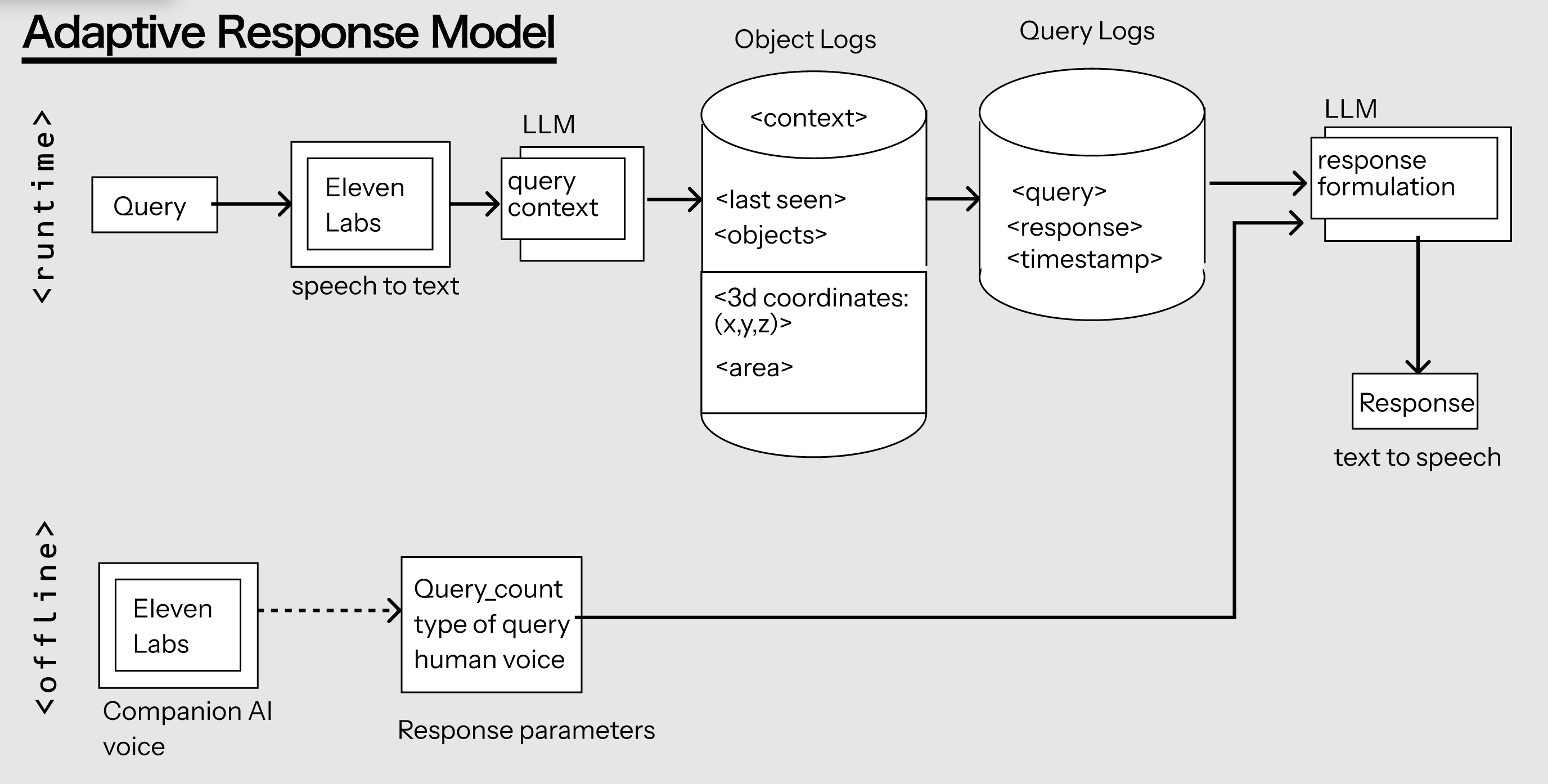
Trace is an assistive spatial memory system designed to support object recall for people with memory impairment. It combines wearable vision with 3D scene reconstruction to answer everyday queries such as "Where did I last leave my phone?"
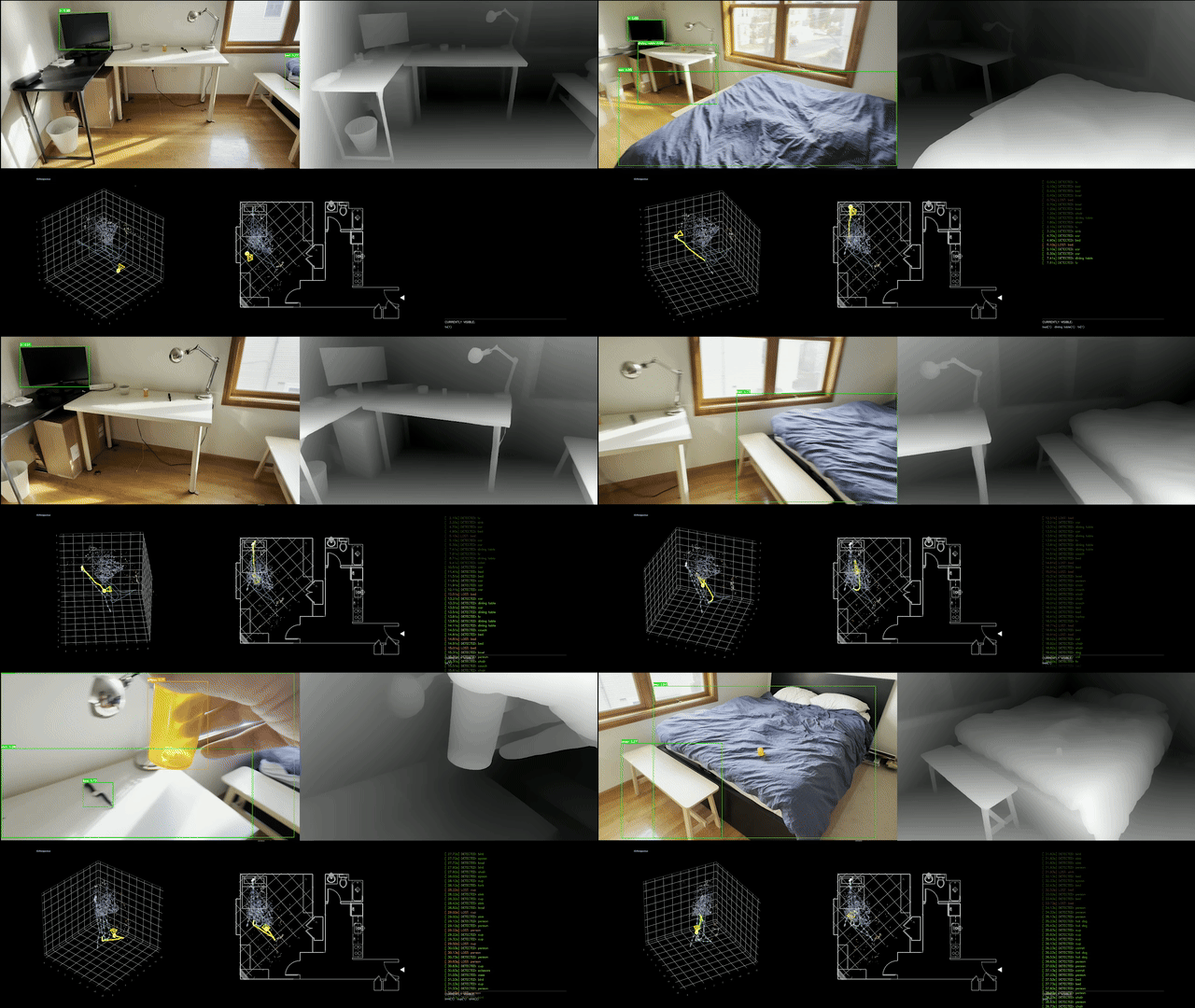
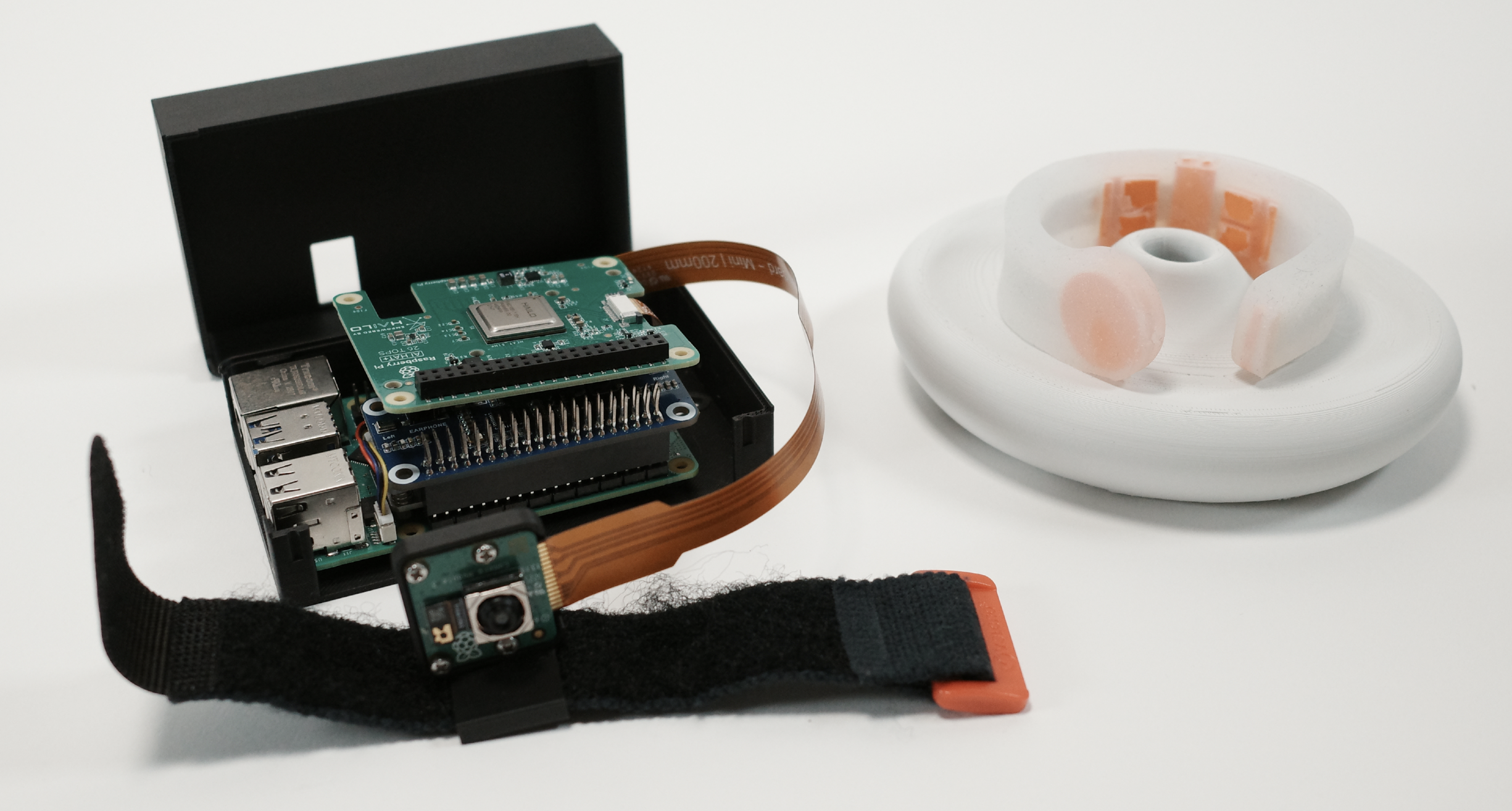
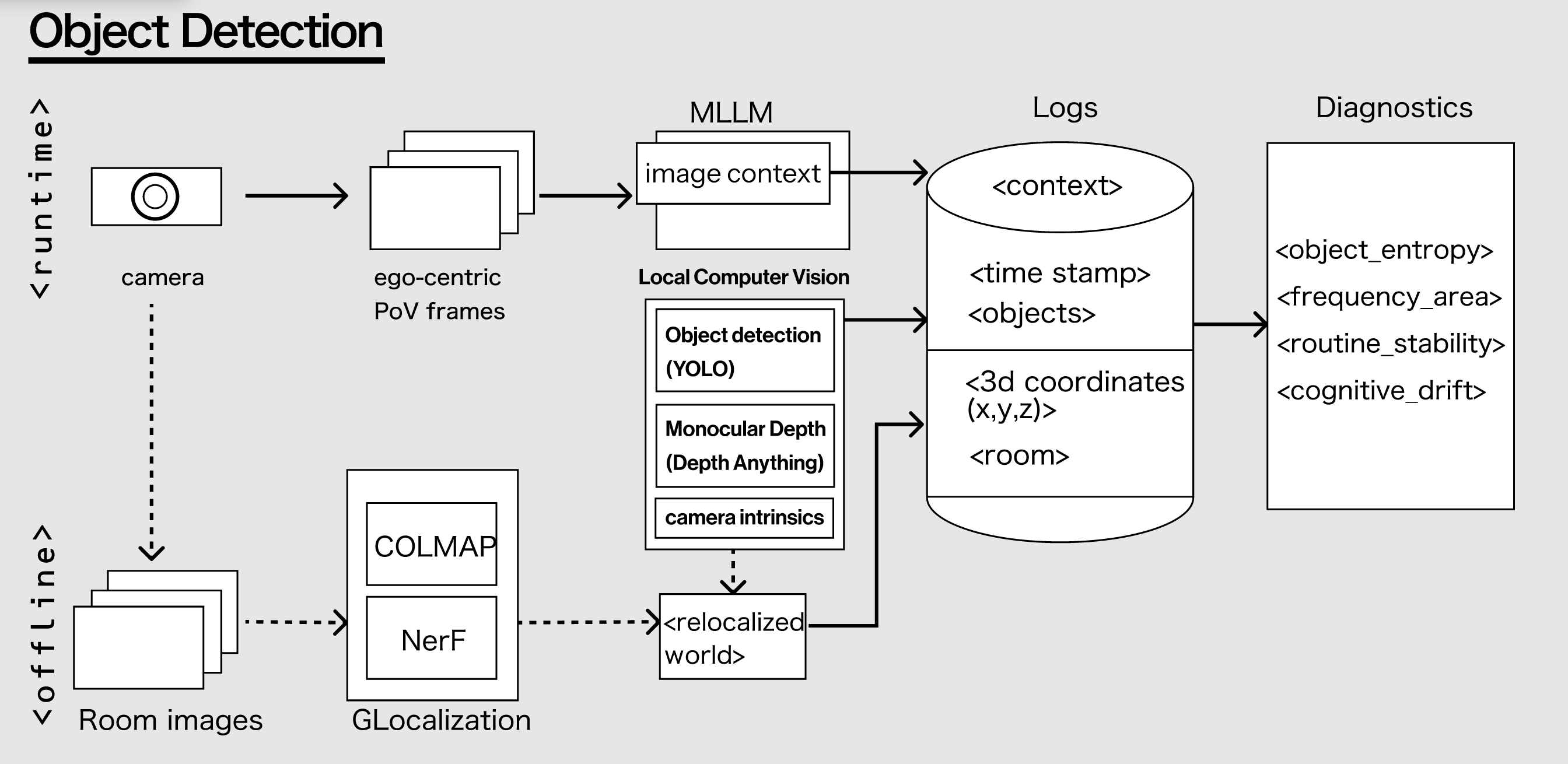
The system integrates real-time object detection, monocular depth estimation, and camera pose estimation to lift 2D observations into consistent 3D world coordinates. A persistent global scene representation (SfM, NeRF, or Gaussian Splatting) provides a stable spatial reference, enabling objects to be localized, logged, and recalled over time. Object locations and metadata are stored in a structured spatial memory and queried through a grounded natural-language interface.


Trace system demonstration

Trace system diagram

Trace interface

Trace visualization